


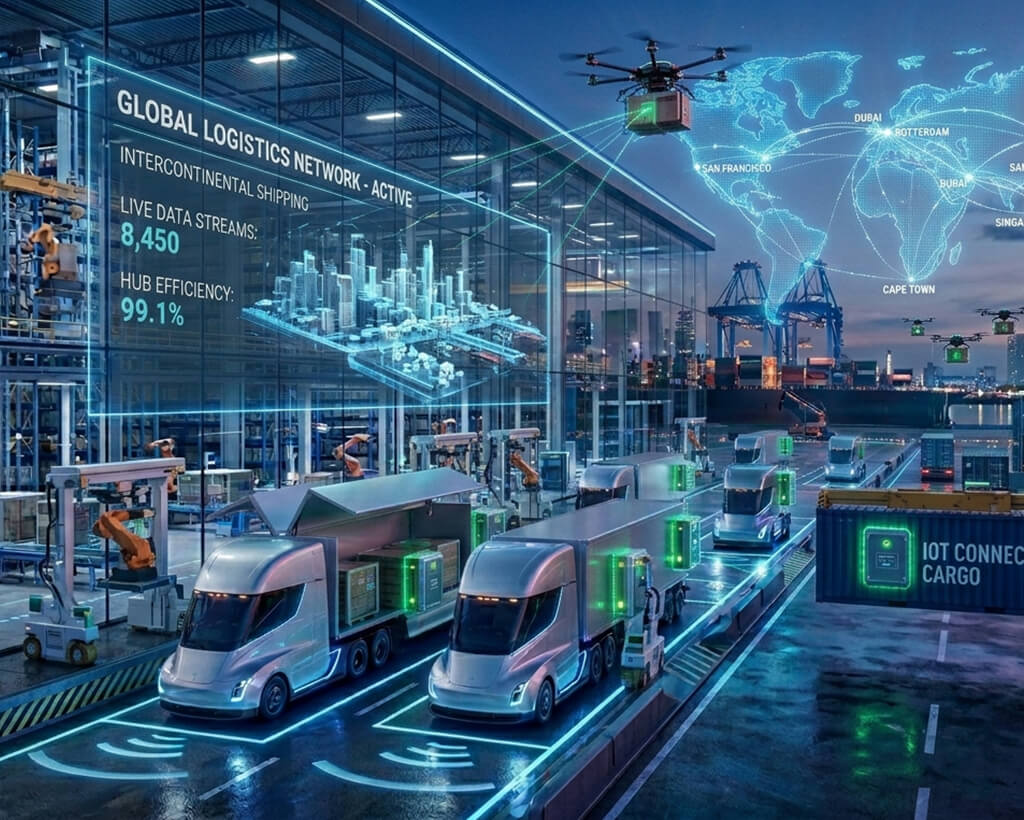
Technology is redefining the logistics industry at an unprecedented pace. From AI to automation, logistics companies are leveraging innovation to improve efficiency, reduce costs, and enhance customer satisfaction.
This blog explores how technology is transforming transportation and logistics in 2026.
1. Artificial Intelligence and Machine Learning
AI is transforming logistics operations by enabling smarter decision-making.
Applications include:
- Route optimization
- Demand forecasting
- Risk management
AI-driven logistics systems can analyze massive datasets to improve efficiency and accuracy.
2. Smart Warehousing and Automation
Warehouses are becoming highly automated.
Key technologies include:
- Robotics
- Automated storage systems
- AI-powered inventory management
These innovations improve speed, accuracy, and scalability.
3. Internet of Things (IoT) in Logistics
IoT devices provide real-time visibility into shipments.
Benefits include:
- Tracking location and condition of goods
- Monitoring temperature-sensitive shipments
- Improving supply chain transparency
4. Digital Freight Platforms
Digital platforms are simplifying logistics operations.
They enable:
- Instant booking
- Real-time tracking
- Transparent pricing
This improves efficiency and customer experience.
5. Autonomous Vehicles and Driver Assistance
Autonomous technology is still evolving but already impacting logistics.
Current applications include:
- Driver-assist systems
- Automated safety features
- Pilot programs for autonomous trucks
These technologies improve safety and reduce operational costs.
6. Cloud-Based Logistics Systems
Cloud technology allows companies to manage logistics operations remotely.
Benefits include:
- Scalability
- Real-time data access
- Improved collaboration
7. Blockchain for Transparency
Blockchain technology is improving transparency in supply chains.
It helps:
- Track shipments securely
- Prevent fraud
- Improve trust between stakeholders
8. Data Analytics and Predictive Insights
Advanced analytics is enabling companies to predict disruptions and optimize operations.
This leads to:
- Better decision-making
- Reduced delays
- Improved efficiency
Conclusion
Technology is no longer optional in logistics—it’s essential.
Companies that invest in digital transformation will gain:
- Higher efficiency
- Better customer satisfaction
- Strong competitive advantage